The ping that builds trust: what real-time notifications do for a SACCO
Members look at their phone after a deposit, not at the ledger. An SMS or push that lands with the posting — amount, balance, reference — is how they know the money is theirs.
TECH247 LIMITED18 Sept 20263 min read
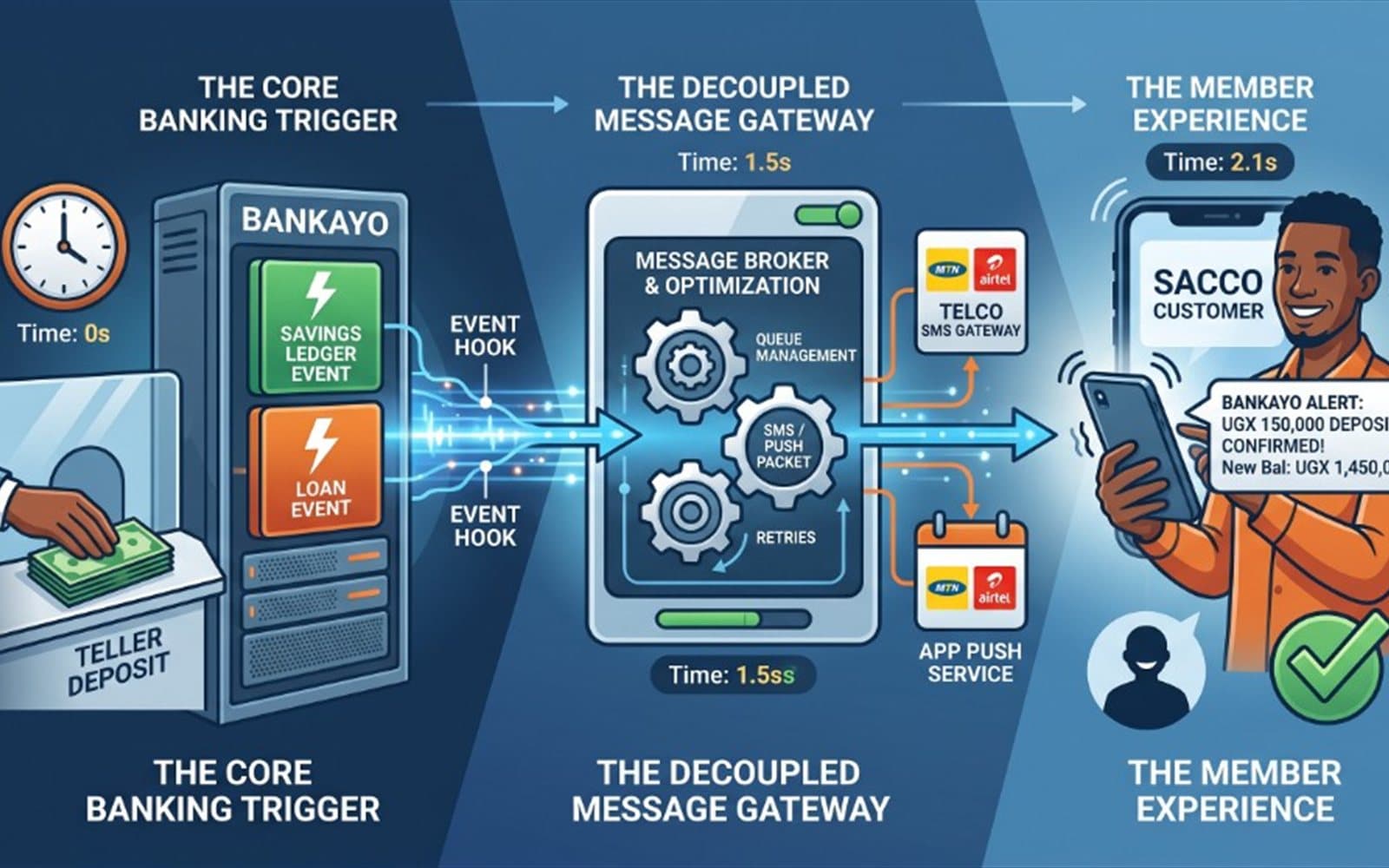
When a member hands cash to a teller, or pushes funds on MTN or Airtel, they do not wait to admire the institution’s books. They look at the phone and wait for the buzz.
That ping is ordinary in retail banking. In a SACCO, an MFI, or an investment club it can be the clearest proof the posting they just made is actually theirs. A notification is not a nice-to-have on top of the core. It is how the member shares the same fact the ledger just wrote.
Here is what that layer gives you, which events are worth speaking, and how to hang the message off the posting itself.
What the member hears
A message that lands with the posting — amount, new balance, reference — answers the questions they would otherwise walk back to the counter to ask:
- The cash is on the account, not still in a till.
- The installment hit principal the way they expected.
- The guarantor has been asked, or the loan has moved a step.
The floor gets quieter. Fewer balance printouts, fewer calls to the field officer. The member has the SMS before they have walked back to the bodaboda. We will not quote a number of seconds. The test is that the phone and the books agree while they are still in the yard.
Four events worth speaking
A complete layer does more than “Payment received.” It follows the same life the core already has. The path is boring on purpose: ledger event → hook → worker or broker → SMS or push gateway → the phone.
1. Receipts. Every cash deposit and withdrawal, every mobile-money credit, every internal transfer. Timestamp, net balance, reference the member can read back to a teller.
2. Loan milestones. Submitted, under review, guarantor requested, approved, disbursed. Each status the officer already sees can be a message the member sees.
3. Repayment reminders. A nudge a few days before the due date gives people time to fund the account. Tell them before the date, not only after. We will not claim a percentage off NPLs. We will say: a reminder is cheaper than a chase.
4. Shares and governance. Share purchases, dividend postings, an AGM notice. Members are owners. A ping that treats them as such is how they stay in the room.
What a good pipeline looks like
The benefit holds when the message is part of the posting, not a pile at close of day.
Per event, not a batch. Each deposit fires its own alert. Members get the 14:00 receipt in the afternoon, and the telco is not asked to swallow thousands of texts at once.
Fees that match the passbook. If an SMS is charged, it is an itemised entry the member can line up with the last receipt.
A status you can show. Queued, sent, delivered — on the same audit trail as the transaction. If a gateway needs a second try, the retry is logged. The officer can say what left the building.
The posting itself should not wait on the telco. A worker or queue talks to the aggregator while the teller finishes the next customer.
Hang it on the event
Apache Fineract is a ledger. When a journal entry commits, that is the moment to fire a listener. BANKAYO already connects SMS and mobile money to instances we run. The pattern that holds up:
- Listen. The core emits the event when the posting is done, not when a job later notices a new row.
- Decouple. A queue or worker talks to the aggregator (HTTP or SMPP) or the push service. The operator workspace stays free for the queue at the window.
- Keep the status. The same audit trail as the transaction. If the SMS left, you can say so.
We do not pretend every community Fineract job ships this. We do say: hook the message to the posting, and the member gets the same truth the books just wrote.
The books, on the phone
The ledger can balance to the last shilling. The ping is how that balance becomes something the member can hold.
Tell us how you notify today. We will say what can hook to the posting and what the telco has to carry.